
Herbs are the most generous thing you can grow on a windowsill. A pot of basil bought on a whim will keep you in leaves for months if you give it a little attention, and a chive plant will come back season after season with almost no fuss. There is no ground to dig, no weeding, no waiting for a dry spell — just a pot, a light-filled sill and the habit of looking things over every few days. Get the basics right and even a modest kitchen window can produce something genuinely worth snipping.
Choosing the right windowsill
Light is the factor that decides everything else. Most culinary herbs come from sunny, free-draining hillsides, so the closer you can get to full sun, the better. A south-facing sill is the prize. East-facing is a decent second, especially for softer herbs such as parsley, chives and mint. West is workable but tends to be windier and cooler. North-facing is the hard assignment: growth will be slower and more spindly, and you are better off concentrating on mint, chives and parsley rather than trying to force basil through a British winter.
Two practical points are easy to miss. First, glass intensifies heat, so a south-facing sill can bake in July — pull pots back a little or close a blind at midday. Second, a radiator directly beneath the sill will dry compost from below and cook leaves from above. If that is your only option, raise the pots on a wooden trivet or a shallow tray of pebbles to create a little air gap. Cold is the other extreme: in winter, leaves pressed against the glass can be chilled and scorched. Turn every pot a quarter turn once a week so the whole plant gets its share of light.
The easiest herbs to start with
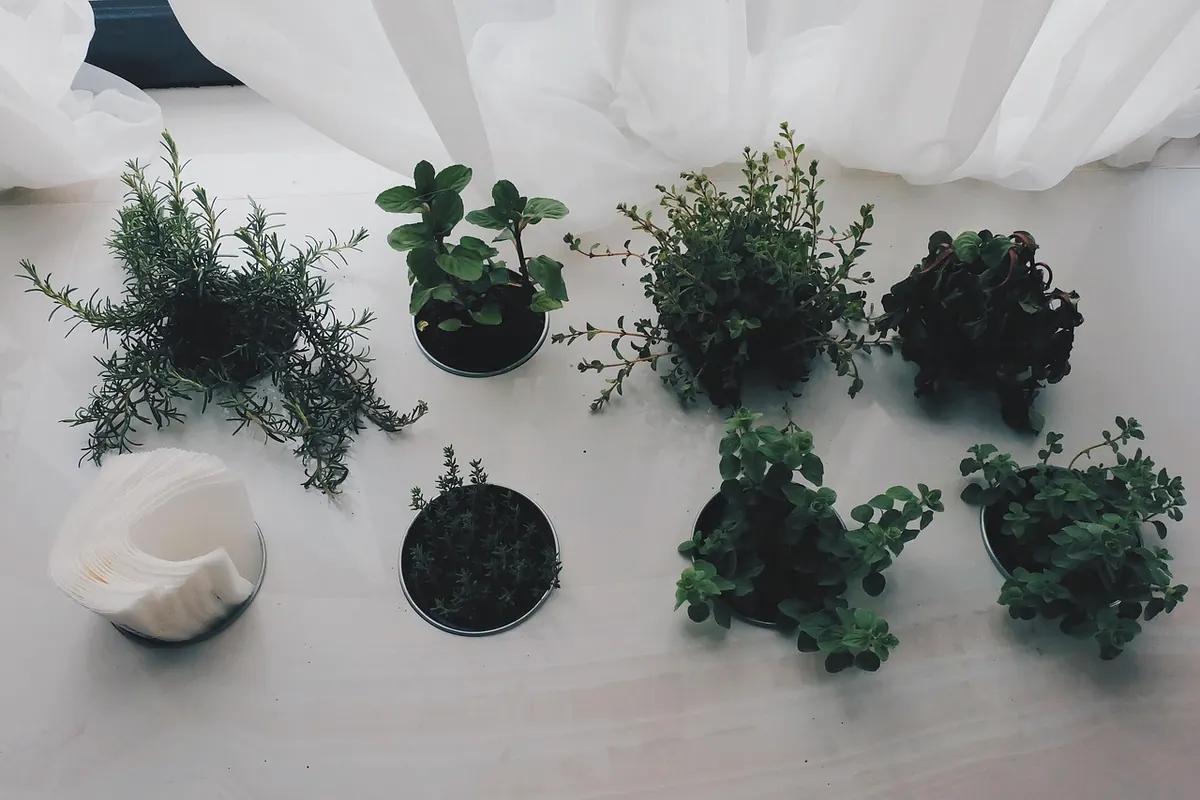
Start with three or four plants rather than a whole shelf. These are the ones that forgive beginners:
- Basil. Tender, thirsty and full of flavour, but it hates cold and will sulk on a chilly sill. Treat it as an annual and resow each spring.
- Mint. Almost indestructible and happy in partial shade. Keep it in its own pot — its roots spread aggressively and will crowd out anything sharing the compost.
- Chives. Tough, grass-like and quick to regrow after cutting. One of the best choices for a north-facing kitchen.
- Parsley. Slow to get going and needs a deeper pot for its long root, but it crops for months and tolerates less sun than most.
- Thyme and oregano. Woody, thrifty plants that want sharp drainage and far less water than you would expect. Excellent for a hot, sunny sill.
- Rosemary. Handsome and useful, but the most demanding of the group indoors. It needs maximum light and very free-draining compost; many plants do better moved outside once the frosts pass.
- Coriander. Fast and rewarding, but it bolts in heat. Sow a few seeds every few weeks rather than relying on one big pot.
Supermarket pots are a cheap way to begin, but they are usually crammed with seedlings competing for the same compost. Either split a pot into two or three smaller ones, or accept that you have bought a cut-and-come-again crop rather than a long-term plant.
Pots, compost and drainage
A single herb wants a pot roughly 15–20cm across; parsley and rosemary do better in something deeper. Terracotta looks lovely and dries out faster, which suits thyme and rosemary but makes life harder for basil. Plastic holds moisture for longer. Either is fine — what matters is a drainage hole and a saucer you actually empty.
Skip the layer of broken crocks at the bottom; it does not improve drainage and can leave the lower compost sitting wet. A good multipurpose compost is perfectly adequate, though Mediterranean herbs benefit from a handful of grit or perlite mixed through. Do not overpot. A small plant in a large volume of wet compost is the quickest way to rot the roots, so move plants up a size at a time rather than straight into a bucket.
Watering and feeding
Watering
More indoor herbs die from kindness than from neglect. Push a finger about 2cm into the compost before you reach for the jug — if it feels damp, wait. The weight of the pot tells you plenty too: a light pot needs water, a heavy one does not. When you do water, do it thoroughly until a little runs into the saucer, then tip that away after half an hour. Watering from below, by standing the pot in a shallow dish for a few minutes, keeps the leaves dry and reduces the risk of mould.
In summer, check daily; in a hot spell you may need to water every day. From October onwards, cut right back. Yellowing lower leaves, a sour smell from the compost or little flies hovering around the pot all point to compost that is staying too wet.
Feeding
Fresh compost contains enough nutrients for the first few weeks, so there is no need to feed a new plant. From spring until late summer, give leafy herbs such as basil, parsley and mint a diluted liquid feed every fortnight — half the strength recommended on the bottle is usually plenty. Thyme, oregano and rosemary need very little. Stop feeding altogether in the dark months, when growth has stalled and unused nutrients simply build up in the compost. Overfed herbs produce soft, lush leaves with weaker flavour and are far more attractive to pests.
Harvesting so the plant keeps producing
Cut from the top, just above a pair of leaves, and the plant will branch below the cut and bush out. Never strip more than about a third of the foliage at once. Use scissors or sharp snips rather than pulling at stems, which can tear the plant loose from its roots.
Basil benefits from having its growing tips pinched out regularly, and any flower buds removed as soon as they appear — once it flowers, the leaves turn bitter and the plant starts winding down. Snip chives in clumps about 3cm above the compost and they will regrow within a couple of weeks. Take parsley stems from the outside of the plant, working inwards. With thyme and rosemary, harvest the soft new growth rather than old woody stems, which rarely reshoot. Flavour is usually at its brightest in the morning, so pick what you need before you start cooking rather than leaving it in the fridge.
Through the British seasons
Spring is for repotting, resowing and starting a fortnightly feed. This is the moment to sow basil and coriander for the year ahead, and to divide or refresh any perennials that have been in the same compost since last summer.
Summer is the easy part — plenty of light, fast growth and an appetite for water. Watch for aphids and whitefly on the undersides of leaves; a firm spray of water, repeated every few days, usually keeps them in check. Keep pinching out flower buds on basil.
Autumn is when growth slows and the compost stays wet for longer. Reduce watering before you think you need to, bring in anything that has spent the summer outside, and check leaves for early signs of mould as the kitchen windows stay closed.
Winter is a test of patience rather than skill. Light levels are low, so plants stretch and go leggy; move them to the brightest sill you have, stop feeding and water sparingly. Hardy herbs such as mint, chives, thyme and rosemary will tick over, though they may look tired. Basil usually gives up, so treat it as a seasonal crop and start again in spring. If you are growing herbs for a specific health reason rather than for flavour, speak to a qualified herbalist or your GP rather than relying on a windowsill supply.
A simple weekly routine
Ten minutes once a week will keep a windowsill garden in good order. Try this order:
- Check the compost with a finger and water only what needs it.
- Turn every pot a quarter turn towards the light.
- Pinch out flower buds and any leggy tips.
- Look under the leaves for pests, and wipe the sill and saucers.
- Feed leafy herbs if you are between spring and late summer.
- Trim away anything yellowing, dead or damp.
That is the whole job. A few pots, a bright sill and a regular glance are enough to keep you in fresh herbs for most of the year, with a natural pause in the darkest weeks when even the best-tended windowsill slows down. Start with mint and chives if you are unsure, add basil in spring, and let the seasons set the pace.
Photo: StockSnap / Pixabay